



Measure the packed bag, not the empty shell
Use the widest outside points of the bag. A soft backpack may compress, but the checker does not assume compression or ignore an oversized edge.
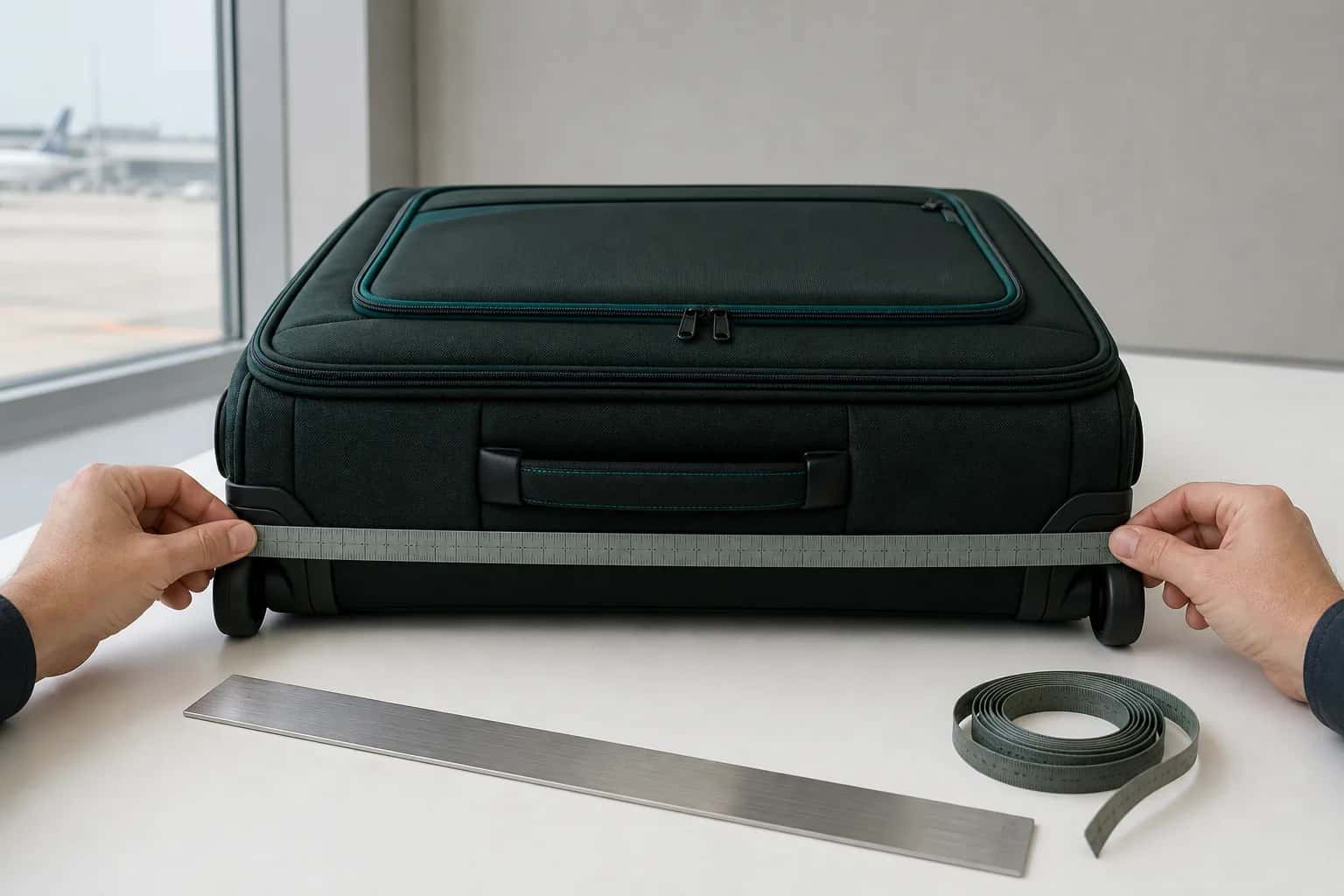
Measure the bag as you will bring it to the airport.
Enter the outside dimensions of your packed bag, including handles, wheels, and pockets. CabinFit checks all six possible orientations against the selected airline rule.
Add your packed bag dimensions to compare them with this airline rule.

Official sources
Published airline rules stay one click away.
Last checked
Dates are visible before you trust a result.
Six orientations
Length, width, and height are rotated before matching.
Name a bag once, reopen the exact measurements, or compare it again. These checks stay only in this browser.
Save a completed result to build a small, private list of the bags you actually travel with.
Use the widest outside points of the bag. A soft backpack may compress, but the checker does not assume compression or ignore an oversized edge.
Measure the bag as you will bring it to the airport.
A bag listed as 40 x 30 x 20 cm may still fit a 30 x 40 x 20 cm airline rule when it can be turned. The result is still a dimensional check, not a guarantee of acceptance.
Browse airline rules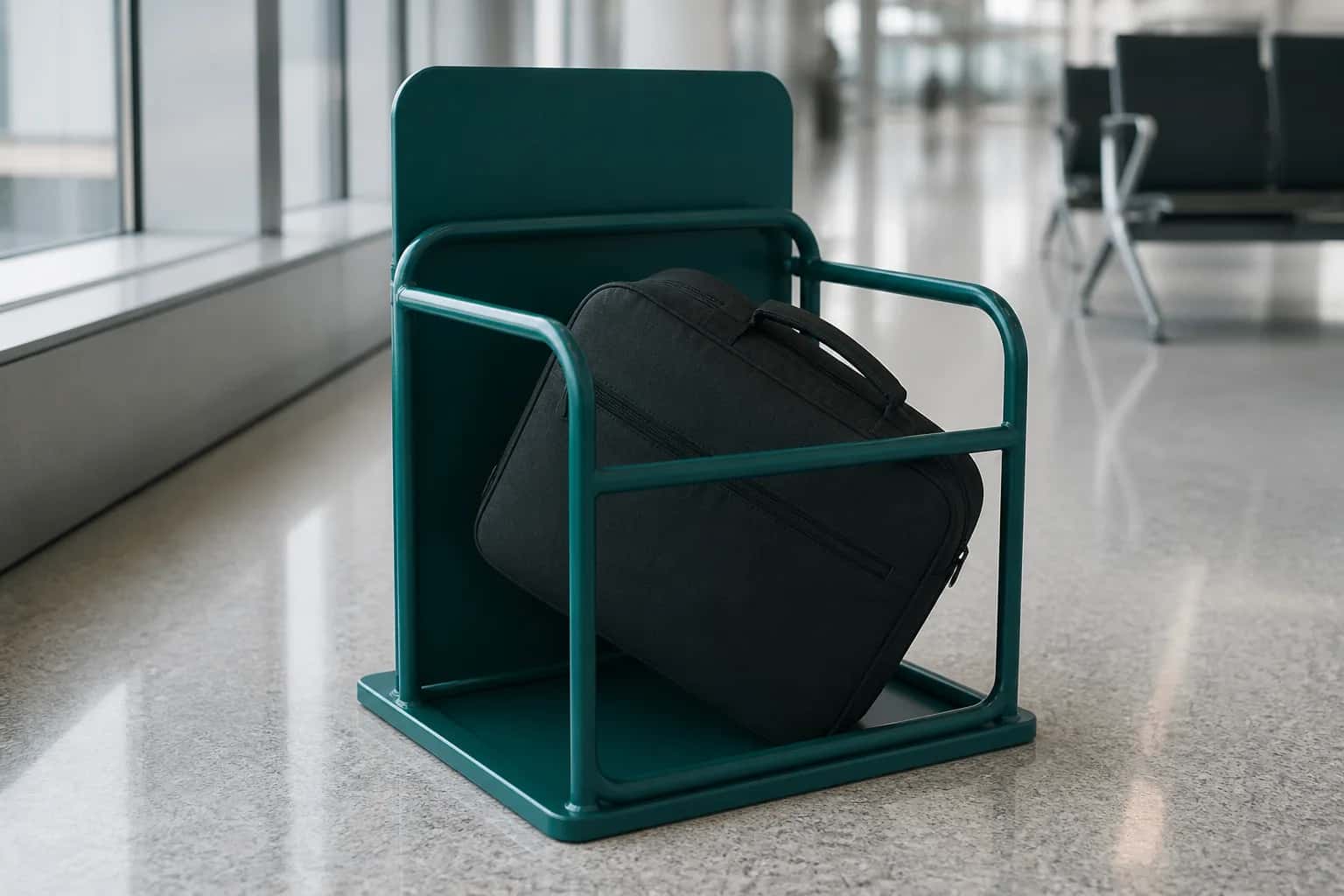
Turn the same packed bag before deciding.
CabinFit tries every length, width, and height orientation against the selected airline rule.
A carry-on — also called a cabin bag or hand luggage — is the larger cabin bag that rides in the overhead bin. Most airlines publish a maximum size around 55 x 40 x 20 cm, and many add a weight limit between 7 and 15 kg.
A size match does not prove ticket entitlement. Some fares include only a smaller underseat item, while an overhead bag may require a bundle or add-on. Check the allowance shown on your booking before you board.
Computed live from CabinFit's source-matched dimension catalogue. Every row links to the airline's full rule page with the official source and source-match date.
| Airline | Max size (cm) | Max size (in) | Weight | Fare | Last checked |
|---|---|---|---|---|---|
| Ryanair | 55 x 40 x 20 cm | 21.7 x 15.7 x 7.9 in | Max 10 kg | Priority | Sep 13, 2026 |
| easyJet | 56 x 45 x 25 cm | 22 x 17.7 x 9.8 in | Max 15 kg | Large bag add-on / easyJet Plus / Inclusive Plus | Sep 13, 2026 |
| Wizz Air | 55 x 40 x 23 cm | 21.7 x 15.7 x 9.1 in | Max 10 kg | WIZZ Priority | Sep 13, 2026 |
| Lufthansa | 55 x 40 x 23 cm | 21.7 x 15.7 x 9.1 in | Max 8 kg | Route and fare dependent | Sep 13, 2026 |
| United Airlines | 56 x 35 x 23 cm | 22 x 13.8 x 9.1 in | Weight not listed | Standard; Basic Economy depends on route and benefits | Sep 13, 2026 |
| Frontier Airlines | 61 x 40.6 x 25.4 cm | 24 x 16 x 10 in | Max 35 lb | Add-on or eligible bundle/status | Sep 13, 2026 |
| Turkish Airlines | 55 x 40 x 23 cm | 21.7 x 15.7 x 9.1 in | Max 8 kg | Economy | Sep 13, 2026 |
| Pegasus Airlines | 55 x 40 x 23 cm | 21.7 x 15.7 x 9.1 in | Max 8 kg | Package, route, or add-on dependent | Sep 13, 2026 |
| British Airways | 56 x 45 x 25 cm | 22 x 17.7 x 9.8 in | Weight not listed | Standard | Aug 10, 2026 |
| Air France | 55 x 35 x 25 cm | 21.7 x 13.8 x 9.8 in | Max 12 kg | Economy / paid Basic fare option | Aug 10, 2026 |
| KLM | 55 x 35 x 25 cm | 21.7 x 13.8 x 9.8 in | 12 / 18 kg combined across personal item + hand baggage (by cabin) | Economy Light/Standard/Flex; add-on for Basic | Sep 13, 2026 |
| Iberia | 56 x 40 x 25 cm | 22 x 15.7 x 9.8 in | Max 10 kg | Economy / Premium Economy | Sep 25, 2026 |
| Vueling | 55 x 40 x 20 cm | 21.7 x 15.7 x 7.9 in | Max 10 kg | Eligible bundle, seat, customer status, infant travel, or add-on | Aug 7, 2026 |
| Norwegian | 55 x 40 x 23 cm | 21.7 x 15.7 x 9.1 in | Max 10 kg | LowFare+ / Flex | Aug 7, 2026 |
| SAS | 55 x 40 x 23 cm | 21.7 x 15.7 x 9.1 in | Max 8 kg | Standard cabin allowance | Aug 7, 2026 |
| Finnair | 55 x 40 x 23 cm | 21.7 x 15.7 x 9.1 in | Max 8 kg | Most tickets / add-on for tickets without carry-on | Aug 7, 2026 |
| ITA Airways | 55 x 40 x 23 cm | 21.7 x 15.7 x 9.1 in | Max 8 kg | Standard hand luggage | Aug 7, 2026 |
| Austrian Airlines | 55 x 40 x 23 cm | 21.7 x 15.7 x 9.1 in | Max 8 kg | Economy Light/Comfort/Flex and long-haul Economy; not short-haul Economy Basic | Aug 7, 2026 |
| Swiss | 55 x 40 x 23 cm | 21.7 x 15.7 x 9.1 in | Max 8 kg | Economy Light/Comfort/Flex and long-haul Economy; not short-haul Economy Basic | Aug 7, 2026 |
| TAP Air Portugal | 55 x 40 x 25 cm | 21.7 x 15.7 x 9.8 in | Max 10 kg | Economy / Economy Prime / Business by route | Aug 7, 2026 |
In Europe the most common published limit is 55 x 40 x 20 cm; US carriers typically use 22 x 14 x 9 in (about 56 x 36 x 23 cm). There is no universal standard, so always check the airline you actually fly with.
Measure the packed bag’s outside first, including wheels, handles and pockets. Some airlines publish a different measurement basis: Wizz excludes handles and wheels, with a separate wheel-extension condition. Check the selected airline’s source before comparing body-only and outside measurements.
Not necessarily. Carry-on entitlement varies by airline, fare, route and ticket conditions. Use the allowance shown on your booking and the airline's official baggage page.
If a packed bag exceeds the published frame, the airline may ask you to repack it, check it or pay the applicable baggage charge. CabinFit shows the measured margin but cannot predict the airport decision.