


Key takeaways
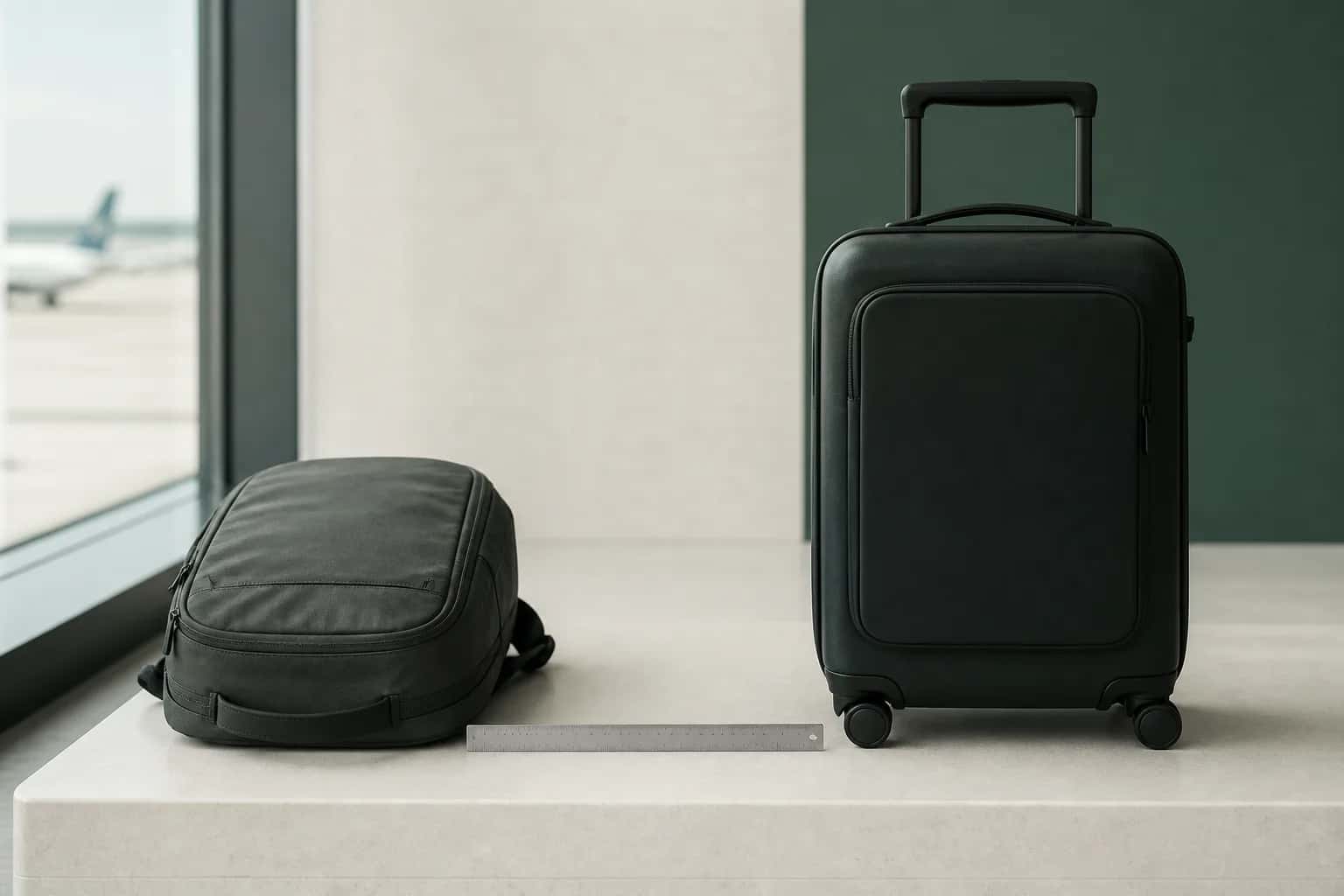
- A personal item goes under the seat; a carry-on goes in the overhead bin.
- Personal items are typically around 45 × 36 × 20 cm (18 × 14 × 8 in); carry-ons are usually around 55 × 40 × 20 cm (22 × 16 × 9 in).
- Many basic and budget fares include only a personal item, not a carry-on.
- The same backpack can count as a personal item on one airline and be too big on another, so always check the specific limits.
Check this guide against your bag
Turn these limits into a real bag check
Enter your packed bag dimensions and compare them with the published airline rule. Choose the airline you are actually flying.
Bag types explained
Measure the packed outside
Include wheels, handles, side pockets, and the shape your bag has when it is full.
- 01Pack the bag first, then measure it.
- 02Check your bag
- 03Compare all airlines
What is a personal item?
A personal item is the smaller of the two cabin bags. It is meant to fit fully under the seat in front of you, so airlines size it to that space. Typical examples are a backpack, a laptop bag, a handbag, a small tote, or an underseat duffel.
Because it lives under the seat, depth matters as much as height. A bag that is the right height but too deep — often because of a bulky laptop compartment or a full front pocket — can still fail the underseat test.
What is a carry-on?
A carry-on is the larger cabin bag that goes in the overhead bin. It is usually a small wheeled suitcase or a larger backpack. Because the overhead bin is shared, airlines are stricter about carry-on dimensions and more likely to gate-check them when the cabin is full.
On most full-service airlines, an economy ticket includes both a personal item and a carry-on. On many low-cost airlines and basic fares, the carry-on is an optional paid extra.
Typical size limits
Sizes vary by airline, but the categories cluster around common figures. Use these as a rough guide, then confirm the exact numbers for your airline and fare:
- Personal item: commonly 40 × 30 × 15 cm up to 45 × 36 × 20 cm (about 16 × 12 × 6 in to 18 × 14 × 8 in).
- Carry-on: commonly 55 × 40 × 20 cm up to 56 × 45 × 25 cm (about 22 × 16 × 9 in).
- Budget airlines often set the smallest personal-item limits, sometimes as tight as 40 × 20 × 25 cm.
- Weight limits can apply to carry-ons even when the size fits, especially in Europe and Asia.
Which one does your ticket include?
The bag category is tied to your fare, not just the airline. The cheapest fares — basic economy, light, or saver fares — frequently include only a personal item. Standard and higher fares usually add a carry-on, and bundled or premium fares may add checked bags too.
Before you fly, check your fare's baggage allowance in the booking confirmation or the airline's fare-rules page. If you are unsure, plan for the smaller allowance and measure your bag against the personal-item limit.
Airlines covered in this guide

Ryanair
- Personal Item
- 40 x 30 x 20 cm
- Basic, included
- Carry-on
- 55 x 40 x 20 cm
- Check fare conditions
- Max 10 kg

Wizz Air
- Personal Item
- 40 x 30 x 20 cm
- Basic, included
- Max 10 kg
- Carry-on
- 55 x 40 x 23 cm
- Check fare conditions
- Max 10 kg

easyJet
- Personal Item
- 45 x 36 x 20 cm
- Standard, included
- Max 15 kg
- Carry-on
- 56 x 45 x 25 cm
- Check fare conditions
- Max 15 kg

United Airlines
- Personal Item
- 43 x 25 x 22 cm
- Standard, included
- Carry-on
- 56 x 35 x 23 cm
- Check fare conditions

Delta Air Lines
- Personal Item
- Check fare conditions
- Check fare conditions
- Carry-on
- 55 x 35 x 22 cm
- Standard carry-on allowance, included

Pegasus Airlines
- Personal Item
- 40 x 30 x 15 cm
- Check fare conditions
- Max 3 kg
- Carry-on
- 55 x 40 x 23 cm
- Check fare conditions
- Max 8 kg

AJet
- Personal Item
- 40 x 30 x 15 cm
- All listed fares, included
- Max 4 kg
- Carry-on
- 55 x 40 x 23 cm
- Standard cabin bag, included
- Max 8 kg

SunExpress
- Personal Item
- 40 x 30 x 20 cm
- SunLight, included
- Max 4 kg
- Carry-on
- 55 x 40 x 23 cm
- Check fare conditions
- Varies by fare

Air Arabia
- Personal Item
- 25 x 33 x 20 cm
- All listed fares, included
- 3 kg per piece; 10 kg total including duty-free
- Carry-on
- 55 x 40 x 20 cm
- All listed fares, included
- 7 kg per piece; 10 kg total including duty-free
Primary sources
Frequently asked questions
It depends on its size, not its type. A small or medium backpack usually counts as a personal item, while a large travel backpack may be sized as a carry-on. Measure it and compare against both limits for your airline.
On most full-service economy tickets, yes. On many basic and low-cost fares, only the personal item is included and the carry-on costs extra. Always check your specific fare.
Usually it counts as your personal item rather than an extra bag. A few airlines allow a small laptop bag in addition to a personal item, but most do not, so do not assume it is free.
Personal-item limits differ between airlines and fares, and budget carriers tend to be the strictest. A bag that fit a generous airline can be too big on a low-cost one, so re-check the limits for each trip.
CabinFit compares published dimensions only and does not guarantee airport acceptance. Always confirm with your airline before you travel.